
Views: 0 Author: Site Editor Publish Time: 2026-08-21 Origin: Site


Selecting the correct glassware requires balancing thermal physics, sensory enhancement, and long-term durability. We often focus heavily on the beverage itself. We forget the vessel plays an equally crucial role. The daily ritual of enjoying these drinks demands tools engineered for absolute perfection. A rising trend features sleek glass coffee mugs. This runs parallel to the long-standing tradition of specific wine glasses. Confusing these vessels might seem completely harmless at a casual glance. However, using the wrong piece compromises delicate flavor profiles. It also introduces real physical safety hazards.
While they might look aesthetically similar, a Wine Glass and a glass coffee mug are fundamentally distinct. They differ vastly in their chemical composition. They contrast sharply in structural architecture and intended fluid dynamics. By the end of this guide, you will understand exactly how material science and structural design dictate the perfect glass for your drink.
Material focus: Coffee glasses rely on borosilicate glass to prevent thermal shock, whereas a standard wine glass uses soda-lime or crystal for clarity and thinness.
Aromatic delivery: Wine glasses utilize a tapered bowl to capture volatile compounds; coffee glasses prioritize direct fluid flow and temperature insulation.
Cross-usage risks: Pouring hot liquids into traditional wine glasses poses an immediate shatter risk due to a high coefficient of thermal expansion.
Purchasing logic: High-end beverage programs should strictly separate these vessels, prioritizing double-walled borosilicate for hot drinks and varietal-specific crystal for wine.
Enjoying a complex beverage involves specific physical reactions. Every sip interacts dynamically with the glass containing it. We must prioritize different structural features depending on what we drink. Physics dictates the ultimate quality of your sensory experience.
Wine requires ample interior surface area. This broad space allows rapid ethanol evaporation. Evaporation releases delicate aromatic compounds into the surrounding air. A well-designed vessel also isolates the liquid effectively. It keeps the warm heat of the drinker's hand far away. The chilled liquid inside remains at an optimal tasting temperature.
Conversely, coffee demands an entirely different handling approach. It requires prolonged heat retention above all else. You need safe handling mechanisms for high-temperature liquids. The vessel must also offer robust durability against daily mechanical stress. Constant stirring and tapping require remarkably strong walls.
Choosing a high-quality Wine Glass or coffee mug depends heavily on mastering these sensory demands. You cannot compromise on the following success criteria:
Match temperature requirements perfectly. The glass must handle intense heat or chilling cold. It should do this repeatedly without degrading the material over time.
Present the beverage accurately. You want brilliant color clarity for a vintage red. You desire perfect crema visibility for a freshly pulled espresso.
Scale seamlessly with user maintenance capabilities. You must consider how you wash them daily. Many commercial venues require strict commercial dishwasher compatibility. Hand-washing delicate rims takes extra time and risks unnecessary breakage.
Traditional materials like crystal and soda-lime dominate the sommelier world. They offer highly specific properties tailored for critical tasting. We evaluate them based on brilliance, physical strength, and thermal reactivity.
Crystal boasts a remarkably high refractive index. We call this visual effect brilliance. It reflects ambient light beautifully through the liquid. Manufacturers can craft it into micro-thin rims easily. This thinness delivers liquid precisely onto your palate. Crystal is also relatively porous on a microscopic level. This subtle texture agitates the liquid when you swirl it. Agitation helps release complex, volatile aromas rapidly.
These traditional materials possess a high coefficient of thermal expansion. This scientific term means they react extremely poorly to sudden heat. Rapid temperature changes cause rapid, uneven structural expansion. This uneven stress leads directly to catastrophic structural failure. They crack or shatter easily under sudden heat stress.
Modern glass coffee mugs rely almost exclusively on borosilicate. Borosilicate contains a compound called boron trioxide. This specific chemical addition yields a very low coefficient of thermal expansion. The material becomes highly resistant to sudden thermal shock.
It is notably less prone to surface scratching. You can pour actively boiling water into it safely. You can immediately submerge that same glass in an ice bath. It will survive the transition completely intact.
However, borosilicate proves difficult to manufacture into ultra-thin rims. It feels noticeably thicker on the lips during a sip. It also generally lacks the light-refracting brilliance found in fine crystal. It appears much more utilitarian by comparison.
Feature | Crystal / Soda-Lime | Borosilicate |
|---|---|---|
Primary Use | Wine and cold beverages | Coffee and hot teas |
Thermal Shock Resistance | Very Low | Very High |
Rim Thickness | Micro-thin (Laser-cut) | Thick (Rolled) |
Visual Brilliance | High (Refractive) | Moderate (Utilitarian) |
Porosity | Micro-porous (Aids aeration) | Non-porous (Smooth) |
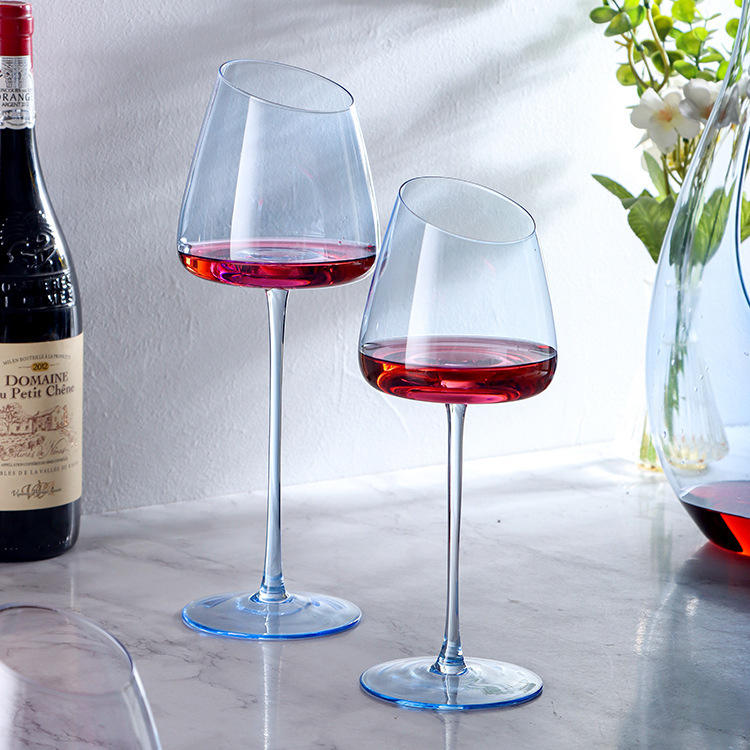
The physical shape dictates exactly how we interact with the beverage. Engineers design every curve for a highly specific functional purpose.
The Bowl: A wide base transitions up to a notably narrow rim. This tapered shape acts as a functional trap. It catches volatile aromatic esters effectively. You can smell the subtle tasting notes much better.
The Stem: It acts as an essential thermal isolator. You hold the stem to keep your warm fingers away. This prevents radiant body heat from warming the delicate liquid.
The Rim: Premium rims are precisely laser-cut. They are exceptionally thin and smooth. This directs fluid seamlessly onto specific palate zones. It enhances the initial tasting notes perfectly.
Double-Walled Construction: This ingenious design creates a sealed vacuum layer. This layer traps dead air between two solid glass walls. It retains interior beverage heat incredibly well. Simultaneously, it keeps the exterior entirely cool to your touch.
The Handle/Body: Some mugs use a thickened single-wall design. They feature sturdy glass handles for grip. Others use a handle-less double-wall shape. Both designs provide essential physical stability. They offer a comforting, tactile warmth in your hands on cold mornings.
The Rim: Coffee vessel rims are significantly thicker. Manufacturers often roll the top edges intentionally. This protects your sensitive lips from accidental scalding. It also withstands heavy, daily impacts against metal spoons or espresso machine spouts.
People often try to mix uses for convenience. This creates significant operational problems. We strongly advise against crossover usage in any setting.
Imagine pouring boiling hot tea into a delicate crystal vessel. The rapid heat transfer causes immediate micro-fractures inside the structure. It often results in sudden, catastrophic shattering. This poses a severe physical safety risk. You risk dangerous cuts and severe hot liquid burns. Never test this limitation in your kitchen.
Serving an aged Pinot Noir in a cylindrical coffee mug ruins it. The straight-sided mug removes the crucial aromatic funneling effect. Your nose loses access to complex volatile compounds. This significantly flattens the entire sensory tasting experience. You miss the intended flavor profile completely.
Chilled white wine requires strict ambient temperature control. Holding a single-walled coffee mug warms the liquid incredibly fast. Without a stem, your hand transfers radiant heat directly. This rapidly raises the internal beverage temperature. It pushes the liquid well above optimal tasting thresholds. It becomes warm and unpalatable very quickly.
Common Mistake: Many home users store all glassware together in one cabinet. They simply grab whatever sits closest to the front. Mixing up a thin soda-lime tumbler and a sturdy borosilicate mug happens frequently. Keep them separated to avoid accidents.
How do you choose what to buy for your home? Follow this simple, three-step decision process.
First, assess the daily utility needs carefully. Do you need high impact resistance for busy, chaotic mornings? Or do you require supreme sensory optimization for quiet weekend tastings? Be honest about how often you will actually use them.
Maintenance requirements matter greatly for longevity. For coffee setups, look specifically for dishwasher-safe borosilicate. Verify double-walled options very carefully before buying. They must have tiny sealed pressure vents at the base. This prevents dirty wash water ingress during cleaning cycles.
For wine service, choose titanium-reinforced crystal if you host large parties. These withstand high-volume use and standard dishwashers. Choose ultra-thin blown glass only for careful, hand-wash environments.
Match your desired outcome directly to the vessel's engineering.
Need extended heat retention? Choose double-walled borosilicate.
Need intense aroma concentration? Choose tapered-bowl crystal.
Need basic multi-purpose utility? Choose tempered soda-lime tumblers. They offer a highly decent compromise. They remain safe for moderately warm liquids. They never tolerate actively boiling liquids. They work passably well for serving casual table wine.
The physical distinction between these two vessel types goes far beyond mere aesthetic marketing. It fundamentally roots itself in applied thermal physics and advanced material science. Attempting to force one specialized vessel to perform both jobs always ends poorly.
Build a targeted glassware inventory tailored exactly to your specific drinking habits.
Invest in double-walled borosilicate strictly for your high-temperature morning routines.
Curate appropriately shaped crystal or soda-lime vessels specifically for evening evaluations.
Start by auditing your current kitchen cabinet today. Remove compromised, clouded, or heavily chipped pieces immediately. Then, acquire purpose-built tools that actively respect both your physical safety and your palate.
A: No. Standard wine glasses are not tempered for high heat. They possess a high coefficient of thermal expansion. They are highly susceptible to shattering from thermal shock.
A: Manufacturers use double walls to provide superior thermal insulation. The vacuum gap between the layers keeps the coffee hot much longer. Simultaneously, it protects the user's hands from painful burns.
A: Usually not. Most stemless versions still utilize standard soda-lime or fine crystal. Some hybrid tumblers do use borosilicate glass. However, they typically lack the delicate, aromatic benefits of a traditionally tapered bowl.
A: Chemically, yes. It remains completely inert and will not alter the taste. However, borosilicate glasses are rarely shaped optimally for proper aeration. They fail to retain subtle aromas effectively.


 +86-13370832299
 9th Floor, Poly Central Mansion, No.1068 Jinshui Road, Qingdao, China