
Views: 0 Author: Site Editor Publish Time: 2026-05-17 Origin: Site


Cafe menus have become increasingly complex over the past decade. You might see everything from a flat white to a short macchiato and feel entirely lost. This complexity causes immense confusion for consumers. It also frustrates home baristas trying to replicate authentic cafe recipes. We need to cut through the noise and understand the core mechanics of coffee making. This definitive guide unpacks the 12 foundational coffee drinks based on modern specialty coffee standards. We build everything from a precise 18-gram to 36-gram espresso baseline.
You will learn the mathematical ratios behind each famous drink on the menu. We will explore how specific extraction parameters dictate flavor profiles. You will also discover why milk textures change everything in your cup. Mastering the menu requires understanding these exact extraction parameters and milk ratios. You must also select proper presentation vessels to preserve delicate temperatures. Let us break down the coffee menu so you can order and brew with absolute confidence.
Coffee drinks are categorized by base extraction (pressure vs. immersion) and exact espresso-to-milk ratios.
The order of ingredients fundamentally changes the drink's chemistry and visual appeal (e.g., Americano vs. Long Black).
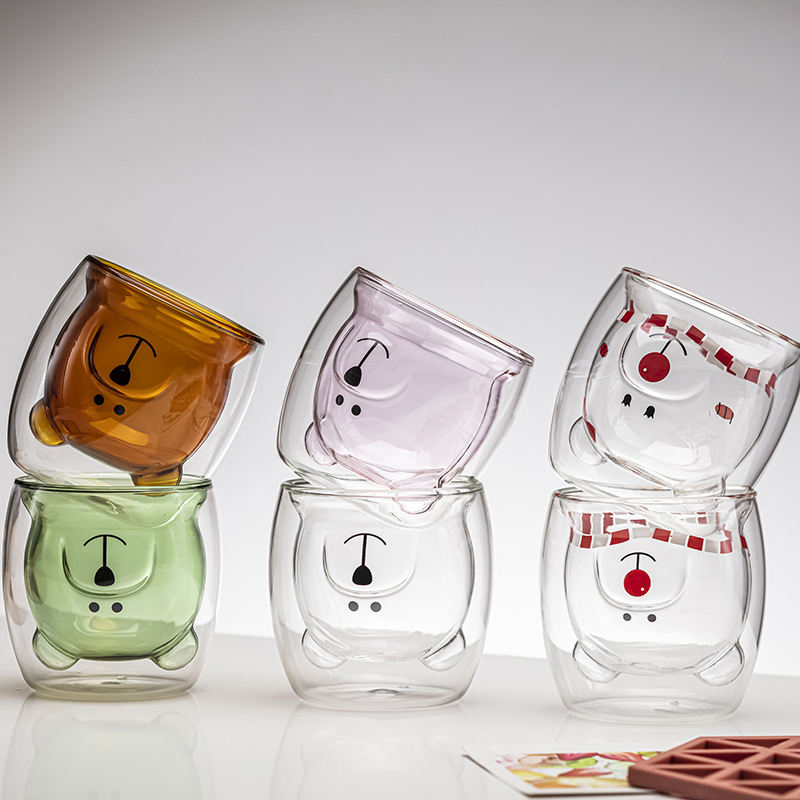
Proper vessel selection, such as utilizing a double wall glass cup, is highly recommended to evaluate milk layering and maintain thermal stability without burning hands.
Home baristas often fail to replicate cafe-quality drinks. They frequently ignore the underlying extraction physics dictating flavor. Pulling a great shot of coffee is essentially a chemistry experiment. You must balance time, temperature, and coffee mass. Without understanding these foundational elements, your final drink will always fall short of expectations.
High-Pressure System (Espresso): This method relies on 9 bars of atmospheric pressure. The machine forces hot water through a dense puck of finely ground coffee. The standard modern yield is a "Double Shot." You typically extract 40 to 50 milliliters of liquid from 18 grams of dry grounds. This creates a highly concentrated, viscous liquid.
Gravity/Immersion System (Brewed): This category relies on time and gentle percolation. Common examples include the French Press and Pour-over. You steep or slowly drip water through coarser coffee grounds. This method produces a cleaner, higher-volume cup compared to espresso.
When evaluating any coffee type, you should assess three main criteria. First, observe the extraction ratio. This compares the dry dose to the liquid yield. Second, look for the presence of crema. This is the golden layer of emulsified oils sitting on top of an espresso. Finally, evaluate the body or mouthfeel. The drink should feel pleasant and balanced on your palate, not thin or overly astringent.
The pure espresso family forms the backbone of any specialty coffee menu. These drinks contain no milk. They rely entirely on water and pressurized extraction. Mastering these four variations is essential for understanding coffee basics.
Espresso (Standard Double): This is the baseline metric for all cafe drinks. The standard ratio is 1:2 (grounds to liquid). Expected outcomes include high acidity, a rich body, and intact crema. You extract roughly 36 grams of liquid from an 18-gram dose.
Ristretto (Short Extraction): This is a restricted shot of espresso. You use the same 18-gram dose but cut the water volume in half. This creates a 1:1 ratio yielding approximately 15 to 20 milliliters. The outcome is sweeter and brighter. It possesses lower bitterness due to the shorter water contact time.
Americano: An Americano features one part espresso diluted with two parts hot water. Implementation reality: You pour the espresso into the cup first. Then, you add hot water second. This order intentionally breaks up the crema. It produces a smoother, less intense initial sip.
Long Black: This is an Australasian coffee standard. You pour hot water into the cup first. Next, you pull the espresso extraction directly on top of the water. Quality check: The golden crema must remain completely intact on the liquid surface. This keeps the intense aromatic oils front and center.
Drink Name | Extraction Ratio | Water Pour Sequence | Crema Status |
|---|---|---|---|
Standard Espresso | 1:2 (18g in, 36g out) | N/A | Intact and thick |
Ristretto | 1:1 (18g in, 18g out) | N/A | Dark and dense |
Americano | 1:2 (Espresso : Water) | Espresso first, water second | Broken / Dissolved |
Long Black | 1:2 (Espresso : Water) | Water first, espresso second | Preserved and floating |
Milk volume dictates the final drink's surface tension and flavor masking capabilities. Assessing dairy layers is crucial for quality control in specialty coffee. The way you steam and integrate milk completely transforms the underlying espresso.
Macchiato (Stained): This drink features 2 parts espresso to 1 part micro-foam. It boasts the highest coffee-to-milk ratio on the menu. You merely "stain" the rich espresso with a small dollop of textured milk.
Cortado: The Cortado uses a strict 1:1 ratio. You mix equal parts espresso and lightly steamed milk. It features zero foam (no-frills). Originating in Spain, baristas designed this drink purely to "cut" the sharp acidity of the espresso.
Flat White: This features 1 part espresso to 2 parts steamed milk. It utilizes a micro-thin layer of foam. The Flat White originates from Australia and New Zealand. It emerged as a cultural rejection of overly aerated traditional foams.
Cappuccino: This represents the classic 1:1:1 ratio. You combine equal parts espresso, steamed milk, and heavy foam. The total volume is typically capped at a traditional 5 to 6 ounces.
Latte: A latte consists of 1 part espresso, 2 parts steamed milk, and 1 part foam. The total volume reaches approximately 11 ounces. It is milk-forward and highly comforting.
Mocha: The Mocha mixes 1 part espresso with 1 part chocolate syrup or powder. You then add 2 parts steamed milk and 1 part foam. It bridges the gap between coffee and hot chocolate.
Layered milk drinks benefit significantly from proper presentation. We highly recommend serving these beverages in a Double Wall Glass Cup. This transparent vessel allows the consumer to visually evaluate the milk-to-coffee separation. You can easily inspect the micro-foam texture. Furthermore, the vacuum insulation prevents rapid heat loss while keeping your hands entirely safe.
Espresso relies entirely on high pressure. Slow brew methods depend on gravity and extended time. These techniques highlight entirely different flavor notes. They often showcase the subtle floral or fruity characteristics of light-roast single-origin beans.
Filter / Pour-over Coffee: This method uses gravity alongside paper or metal filters. Scaling consideration: Paper filters actively remove distinct coffee oils. This creates a remarkably cleaner cup. Conversely, metal filters leave natural oils and micro-grounds inside the liquid. This results in a much heavier body. Pour-over is traditionally better suited for delicate, light-roast beans.
Cold Brew: Cold brew requires a 12 to 24-hour cold water immersion. You never expose the coffee grounds to hot water. Scientific distinction: This distinct lack of heat extraction results in significantly lower titratable acidity. It makes the final drink incredibly smooth. However, the cold process often mutes complex floral notes compared to a flash-brewed iced coffee.
Brewing perfect coffee is only half the battle. Presenting it correctly is equally important. Serving specialty coffee requires vessels supporting the drink's specific thermodynamic needs. Poor cup choices ruin great coffee very quickly.
Thick ceramic mugs absorb heat rapidly from the liquid. This cools your coffee prematurely. Conversely, standard single-pane glass loses heat directly to the surrounding air. It also physically burns your fingers when holding a hot drink. You need a solution bridging insulation with visual clarity.
Solving thermal retention issues requires smart material choices. Investing in a Double Wall Glass Cup made from high-grade borosilicate glass is the modern industry standard. This material provides exceptional thermal shock resistance. You can pour boiling water into it without fear of shattering. Additionally, the double-walled vacuum prevents external condensation from forming on iced cold brews.
These glasses are highly aesthetic and functional. However, double-walled glasses are inherently more fragile than thick diner ceramics. You should specifically look for commercial-grade borosilicate when shortlisting products for daily home use. Handle them with reasonable care during washing.
Audit your current home menu preferences. Evaluate what you actually brew most often. If you predominantly drink Cortados, Flat Whites, or Macchiatos, adjust your cabinet. Prioritize purchasing 5-ounce to 8-ounce transparent, insulated glassware. Proper sizing optimizes the tasting experience by maintaining exact milk-to-coffee ratios.
Mastering the cafe menu starts with understanding the basic 18g:36g espresso extraction metric.
Milk texture and exact dairy ratios dictate whether you are drinking a Latte or a Flat White.
The sequence of pouring ingredients alters crema structure, notably separating the Americano from the Long Black.
Elevating daily coffee consumption relies equally on sourcing right beans and applying accurate parameters.
Implementing proper temperature-retaining glassware preserves your drink's delicate flavor profile from the first sip to the last.
A: The difference lies entirely in the pouring sequence. For an Americano, you pour espresso first and add hot water second, which intentionally breaks up the crema. For a Long Black, you pour hot water first and extract the espresso on top. This protects the delicate crema and preserves intense aromatics.
A: No, a Frappuccino is not a traditional coffee drink. It is a specific trademarked blended beverage owned by Starbucks. The traditional Greek equivalent of a blended, frothy iced coffee is called a Frappé. The Frappé usually utilizes instant coffee, sugar, and water shaken vigorously.
A: Home baristas frequently make two common errors. First, they over-aerate the milk, creating stiff, dry bubbles instead of silky micro-foam. Second, they use oversized 12-ounce mugs. A traditional cafe Cappuccino adheres to a strict 5 to 6-ounce standard to maintain a strong coffee flavor.
A: Yes, cup material affects perceived taste through thermal decay. Rapid heat loss in uninsulated cups causes coffee to cool quickly. As coffee cools, human taste receptors perceive increased sourness and bitterness. Insulated materials keep the beverage within its optimal flavor-tasting temperature range for much longer.


 +86-13370832299
 9th Floor, Poly Central Mansion, No.1068 Jinshui Road, Qingdao, China