
Views: 0 Author: Site Editor Publish Time: 2026-05-31 Origin: Site


Consumers are rapidly abandoning plastics in their daily kitchenware. Growing skepticism toward endocrine-disrupting chemicals and "forever chemicals" like PFAS drives buyers toward traditional alternatives. We want absolute peace of mind when we pour our morning coffee or tea.
However, both glass and ceramic frequently market themselves as "non-toxic" solutions. The reality is much more complex. Not all alternative materials are created equal. Manufacturing variations, untested glazes, and historical compositions introduce hidden variables. We cannot simply trust a basic "eco-friendly" label without inspecting the underlying chemistry.
This article provides an evidence-based evaluation framework. We will compare the chemical stability of glass versus ceramic. You will learn how to confidently choose your next daily drinkware without risking heavy metal exposure. Specifically, we will evaluate the safety, performance, and purity of a Double Wall Glass Cup.
Modern, clear glass is inherently inert and non-porous, making it virtually immune to chemical leaching, whereas ceramic safety depends entirely on the formulation of its glaze.
The primary toxicity risk in ceramics stems from lead or cadmium used in decorative glazes, particularly in vintage, unregulated, or unbranded artisanal pieces.
High-grade borosilicate glass (often used in a quality double wall glass cup) offers 10x the chemical resistance of standard soda-lime glass and eliminates the need for potentially toxic thermal coatings.
When evaluating safety, transparent, unpainted borosilicate glass requires zero guesswork regarding Prop 65 compliance or heavy metal testing.
Marketers frequently misuse the term "non-toxic" to sell kitchenware. They rely on consumer fears regarding plastics and Teflon. This creates a confusing landscape. Buyers struggle to identify truly safe materials. We must look past marketing buzzwords and examine actual manufacturing processes.
Many popular brands sell "ceramic" mugs or pans. Often, these products feature a cheap ceramic coating rather than true ceramic. Industry experts call this a quasi-ceramic material. Manufacturers produce it using a sol-gel process. They cure this coating at relatively low temperatures, usually between 400°F and 800°F.
True kiln-fired ceramics fire at temperatures exceeding 2000°F. The extreme heat vitrifies the material. It becomes glass-like and highly stable. Sol-gel coatings cannot match this stability. They degrade over time. As they break down, they can release synthetic organic polymers into your hot beverages.
Raw clay comes directly from the earth. It is completely natural. However, natural does not always mean safe. Depending on its geographical origin, raw clay can contain trace heavy metals.
The glaze presents an even bigger hazard. Historically, manufacturers achieved vibrant colors and glossy finishes by adding lead and cadmium to their glazes. Some unregulated factories still use these toxic elements today. If they fail to fire the kiln hot enough, the heavy metals remain loosely bound on the surface.
How do we define a truly safe vessel? A non-toxic cup must pass three strict tests:
Zero Chemical Leaching: It must not release heavy metals or polymers into highly acidic environments, such as hot coffee or lemon tea.
Thermal Resilience: It must survive extreme temperature fluctuations without cracking or weakening.
Surface Integrity: It must maintain its original finish without flaking, peeling, or degrading over years of daily use.
Ceramics offer excellent heat retention and beautiful aesthetics. They feel comforting to hold. Yet, their chemical safety varies wildly. You must understand how different ceramics interact with liquids to make an informed choice.
Not all ceramics possess the same density. True, high-fired porcelain is naturally non-porous. It does not absorb liquids. You could technically use unglazed porcelain safely.
Stoneware and earthenware tell a different story. These materials remain porous after firing. They rely entirely on a protective liquid-glass coating called a glaze. This glaze prevents liquid absorption. It stops bacteria from growing inside the clay matrix. If the glaze chips or degrades, the porous clay becomes exposed.
Beverages like coffee and black tea are highly acidic. Acid acts as a solvent. When you pour hot coffee into a ceramic mug, the acid attacks the glaze. If the factory improperly formulated the glaze, the acid accelerates chemical leaching. It pulls lead or cadmium directly into your drink.
Low firing temperatures exacerbate this issue. If a manufacturer rushes production and fires the ceramic too low, the heavy metals never seal properly. They sit precariously on the surface, ready to detach.
Safety agencies recognize these risks. The California Proposition 65 standard provides excellent guidance. It strictly limits daily lead exposure to just 0.5 micrograms. Brands boasting Prop 65 compliance guarantee a high level of safety. They undergo rigorous third-party lab testing.
However, many products bypass these checks. Unverified imports often flood online marketplaces. Handmade goods from local craft fairs also skip standardized testing. The artisan might buy commercial glazes without understanding their chemical breakdown.
You can protect yourself by following simple best practices. We highly advise avoiding vintage ceramics for daily food use. Prior to modern regulations, heavy metal glazes were standard practice. You should also avoid mugs featuring brightly colored interiors. Stick to plain white interiors. Finally, avoid unverified artisanal mugs for daily hot beverage consumption. Save them for pen holders or decorative display.
Ceramic Toxicity Risk Table | |||
Ceramic Type / Style | Porosity | Heavy Metal Risk Level | Primary Safety Concern |
|---|---|---|---|
High-Fired Porcelain (White) | Non-Porous | Very Low | Generally safe; completely vitrified. |
Modern Commercial Stoneware | Porous (requires glaze) | Low | Must verify Prop 65 compliance for glazes. |
Brightly Painted Artisanal Mugs | Porous (requires glaze) | Moderate to High | Colorful interior glazes may leach cadmium/lead. |
Vintage/Antique Earthenware | Highly Porous | Very High | Manufactured before strict lead regulations. |
Glass presents a drastically different chemical profile. People have trusted glass for centuries. It remains one of the purest materials available for food storage and drinkware.
Standard everyday glass is known as soda-lime glass. Manufacturers create it by melting three simple ingredients. They use silica sand, soda ash, and limestone.
This elemental combination forms a tightly interlocked molecular structure. The resulting material is naturally inert. It will not react chemically with acids or bases. It is completely impermeable, meaning it never absorbs odors or flavors. Furthermore, glass is 100% infinitely recyclable. It never loses its quality during the recycling process.
Chemically, standard glass is exceptionally safe. You never have to worry about polymers or heavy metals leaching from a basic clear glass jar.
However, standard soda-lime glass has a physical weakness. It is highly vulnerable to thermal shock. If you pour boiling water into a cold soda-lime glass, it will shatter violently. The material expands unevenly under rapid temperature changes. This physical limitation reduces its utility for daily hot beverages like coffee or tea.
While clear modern glass is safe, historical and specialty glasses harbor hidden dangers. You must exercise caution around specific vintage items.
Never use vintage lead crystal for acidic beverages. Crystal achieves its brilliant sparkle through the addition of lead oxide. Acidic liquids leach this lead rapidly. You should also avoid Depression glass. Manufacturers used trace amounts of uranium to give it a distinct green glow. Older opaque milk glass is another hazard. Factories historically used arsenic to achieve that cloudy white appearance. Always stick to modern, transparent formulations.
Standard glass breaks under thermal stress. Ceramic poses hidden heavy metal risks. Fortunately, material science offers a perfect compromise. High-grade borosilicate glass solves both problems beautifully.
Manufacturers alter the standard glass recipe to create borosilicate glass. They add boron trioxide to the silica sand. This addition drastically alters the material's physical properties.
It creates a tightly bound, highly stable molecular network. This network boasts a very low coefficient of thermal expansion. Because it hardly expands when heated, it withstands drastic thermal shocks. You can subject borosilicate glass to temperature swings of up to 330°F (170°C) without it cracking. You can pull it from a freezer and pour boiling water directly into it.
We do not have to guess about borosilicate safety. The global scientific community already relies on it. It serves as the primary material for biomedical testing and laboratory equipment.
Agencies regulate it heavily under ISO 3585 and ASTM E438 standards. Borosilicate glass is chosen for laboratories because it forms a microscopic protective layer immediately upon contact with liquids. This layer completely stops any further chemical interaction. It guarantees absolute purity for sensitive scientific samples. It provides that exact same purity for your morning coffee.
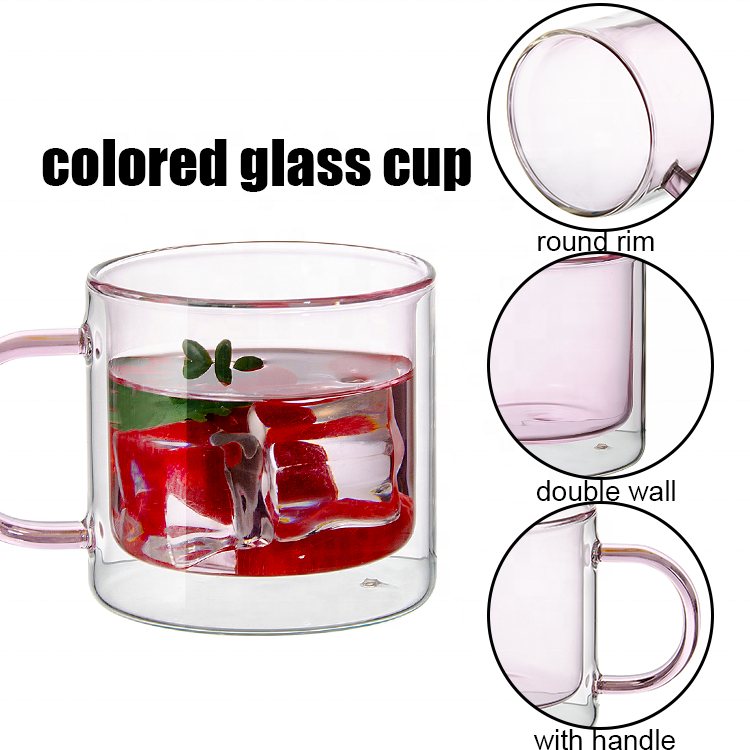
When you combine borosilicate glass with smart engineering, you get the ultimate drinkware. A Double Wall Glass Cup maximizes both safety and usability.
Feature: Two separate layers of borosilicate glass separated by a vacuum space.
Outcome 1 (Safety): The vacuum acts as a perfect insulator. It keeps the exterior wall cool to the touch. This completely eliminates the need for external silicone sleeves, synthetic plastic handles, or chemical thermal coatings to protect your hands from burns.
Outcome 2 (Purity): The design ensures your beverage only ever touches pure, unpainted, heavy-metal-free silica. There are no glazes to chip off and no coatings to degrade.
Material Thermal & Chemical Stability Chart | |||
Material | Thermal Shock Resistance | Chemical Inertness | Best Used For |
|---|---|---|---|
Soda-Lime Glass | Low (Prone to shattering) | High (Inert) | Cold beverages, room temp storage. |
Standard Ceramic (Glazed) | Moderate (Can crack over time) | Variable (Depends on glaze) | Warm beverages, aesthetics. |
Borosilicate Glass | Very High (Up to 330°F variance) | Very High (Lab-grade) | Hot coffee, tea, extreme temps. |
The market is flooded with cheap imitations. Some brands sell basic soda-lime glass disguised as premium drinkware. Others use hidden plastic layers. Follow this four-step logic to ensure you purchase a genuinely safe Double Wall Glass Cup.
Step 1: Demand Transparency. Always look for explicit "100% Borosilicate Glass" labeling on the packaging or product description. Avoid brands using vague marketing terms. Phrases like "shatter-resistant glass" or "crystal-clear resin" usually indicate cheap plastic or basic soda-lime composites.
Step 2: Inspect the Design. Choose a cup featuring a completely clear interior. Avoid products exhibiting interior painted decals. Skip items utilizing tinted colored glass on the inside layer. Cheap decorative pigments frequently introduce heavy metals back into the equation. Clear glass guarantees purity.
Step 3: Verify Manufacturing Standards. Look for reputable brands. They explicitly state their Prop 65 compliance. The best manufacturers feature third-party lab testing certificates verifying the absence of lead and cadmium. Transparency builds trust.
Step 4: Assess the Seal. Examine the bottom of the cup. For double wall designs, check the quality of the pressure-relief node. Factories seal this small dot at the base during manufacturing. A high-quality seal ensures water won't become trapped between the walls during dishwasher cycles. Trapped moisture eventually breeds mold, creating a biological hazard.
Choosing the right drinkware impacts your daily health. High-quality, properly glazed ceramic remains perfectly safe for most consumers. However, glass—specifically borosilicate—removes all guesswork. It eliminates concerns regarding heavy metals, porous clay, and degrading sol-gel coatings entirely.
We encourage you to audit your current kitchen cabinets today. Retire any chipped ceramics, vintage earthenware, or peeling travel mugs. Replace them with a clear, high-quality Double Wall Glass Cup. This simple investment guarantees maximum safety, superior temperature retention, and complete peace of mind with every sip.
A: Yes. Many affordable ceramic-coated mugs use a sol-gel process instead of true kiln-fired ceramic. These coatings cure at much lower temperatures. Over time, frequent exposure to boiling water and acidic coffee causes the coating to degrade, peel, and release synthetic organic polymers into your drink.
A: Modern tinted glass is generally safe because manufacturers melt the color directly into the glass matrix, binding it securely. However, cheap painted decals on the glass surface can flake off. Clear, unpainted glass always remains the most risk-free option for daily hot beverages.
A: Pure borosilicate glass contains absolutely no moisture or trace metals, making it perfectly microwave-safe. Conversely, unglazed ceramic bases absorb tiny amounts of water during washing. Additionally, some ceramic glazes hide metallic compounds. These hidden elements can overheat, spark, or cause the mug to crack in the microwave.


 +86-13370832299
 9th Floor, Poly Central Mansion, No.1068 Jinshui Road, Qingdao, China